What’s one conversation happening in your industry right now that deserves more attention?
In the mortgage industry, I genuinely think the conversation around later life lending and equity release deserves far more attention than it’s currently getting Most advisers still focus heavily on first-time buyers and standard residential lending, but there’s a huge demographic shift happening in the background that I don’t think the industry has fully caught up with yet.
Over the next few years, we’re going to see more clients reaching retirement with outstanding mortgage debt, inadequate pension provision, and significant equity tied up in property. At the same time, many of their children are struggling to get onto the property ladder without financial support.
Historically, equity release had a pretty poor reputation, so a lot of advisers still avoid the conversation entirely. But modern later life lending products are very different to what existed 20 years ago. There’s far more flexibility, more regulation, and more consumer protection now.
I think by 2027 onwards, later life lending is going to move from being a niche specialism into something far more mainstream. Advisers who understand it properly will be in a very strong position because this won’t just be about ‘releasing equity’ anymore — it’ll become part of retirement planning, intergenerational wealth planning, and helping clients manage affordability later in life.
The industry talks a lot about helping first-time buyers, but I think we need to start paying equal attention to what happens at the other end of the client journey too.”
In a market driven by technology, where do human relationships still matter most?
I actually think human relationships are becoming more valuable as technology advances, not less.
AI and automation are going to remove a huge amount of admin, information gathering, content creation, and transactional communication from industries like mortgages and financial services. Clients will be able to compare products faster, get answers instantly, and complete processes far more efficiently than ever before.
But what technology can’t replace is emotional trust, reassurance, judgement, and genuine human connection — especially in high-stakes situations involving money, homes, families, and life decisions.
I think we’re already seeing people become overwhelmed by automation. Everyone’s using AI-generated content, automated emails, chatbots, and templated messaging, and as a result, authentic human interaction stands out more than ever.
In this kind of market, the advisers and businesses that will win long term won’t necessarily be the ones with the most automation. It’ll be the ones who make clients feel genuinely seen, understood, and supported.
People don’t just remember the interest rate they got. They remember who answered the phone when they were panicking. Who explained things clearly without making them feel stupid. Who supported them through a stressful life stage.
Technology will absolutely change how we work. But relationships, trust, communication, and emotional intelligence are becoming the real differentiators now — not the admin side of the job.”
What’s changed most about customer expectations over the last few years?
I think customer expectations have changed massively around speed, accessibility, and personalisation.
People are now used to instant answers in every area of life. They can order something on Amazon at midnight, message a business on Instagram, ask AI a question in seconds, or compare products online instantly — and that expectation has naturally carried over into industries like mortgages and financial services too.
Clients don’t want to wait days for updates anymore, and they don’t want to feel like they’re being passed around a system. They expect communication to be quicker and more convenient.
At the same time though, I think there’s been an interesting shift where people also want more human connection, not less. We’re in a world full of automation, chatbots, templated emails, and AI-generated content, so when somebody gets genuine support, clear communication, and personal attention, it stands out immediately.
Customers now expect businesses to be both efficient and human. They want fast processes and modern systems, but they also want to feel understood, reassured, and supported — especially when they’re making big financial decisions.
The businesses doing well now are the ones managing to combine both: using technology to improve the experience without losing the personal relationship side of it.”
What’s one challenge the industry still hasn’t solved properly yet?
One of the biggest challenges financial services still hasn’t solved properly is training and education.
In many ways, the industry still teaches people the same way it did twenty years ago. A lot of learning is still heavily based around textbooks, long-form reading, or someone presenting slides that are essentially repeating what’s already written in the manual.
For some people, that works perfectly well. But for a huge percentage of learners, it just isn’t how they absorb information best.
The problem is that the qualification process becomes less about whether somebody could actually become a brilliant adviser, and more about whether they fit one very traditional style of learning.
I think that creates a massive barrier within the industry, because there are so many people who would make exceptional financial advisers (people with emotional intelligence, communication skills, empathy, people skills, commercial awareness) but they end up doubting themselves or leaving entirely because they struggle with the way the content is delivered.
We talk a lot in financial services about diversity and attracting new talent into the industry, but we rarely talk about learning accessibility. Not everyone learns best by reading hundreds of pages of technical material in isolation. Some people need structure, accountability, visual learning, repetition, discussion, practical application, or community support to actually retain information confidently.
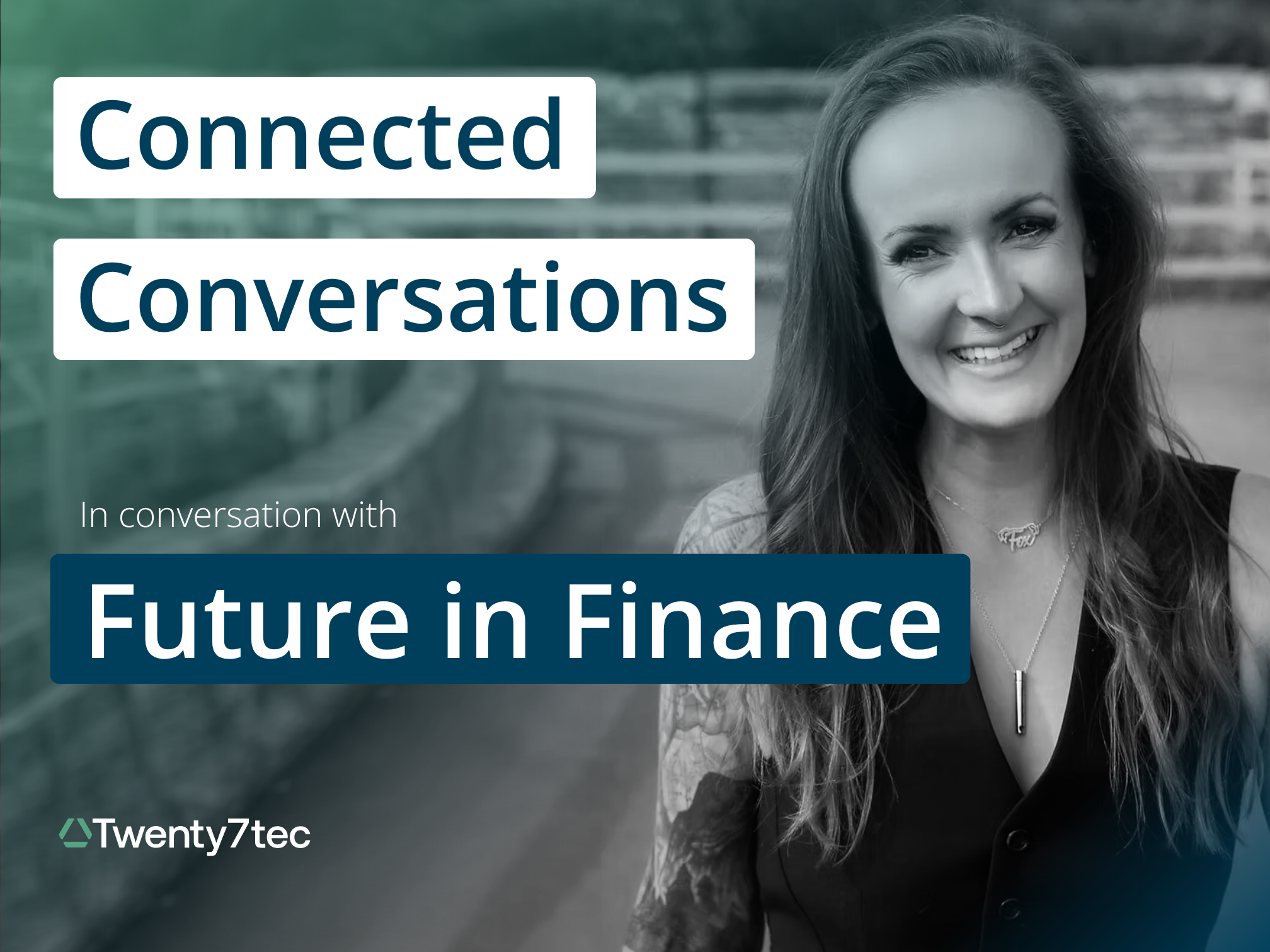
That’s a huge part of why I created Future in Finance. I wanted to build training in a way that feels more human, supportive, realistic, and accessible to modern learners without lowering standards.
Because passing exams is important, but the industry also needs to recognise that being able to memorise a textbook and being able to guide real clients through major financial decisions are two very different skill sets.
Looking ahead, what gives you the most optimism about the future of the industry?
What gives me the most optimism about the future of financial services is the people coming into it now particularly the younger generation.
There’s a real shift happening in what people value. The industry used to feel quite closed, quite traditional, and in some places still carries that ‘old boys club’ energy where success was defined by networks, hierarchy, and a very specific type of personality, but thankfully that’s changing.
Younger advisers are coming in and placing far more emphasis on transparency, communication, inclusivity, and actually helping clients understand what’s going on (ot just pushing products or hitting targets). There’s a stronger sense of purpose entering the industry, and I think that’s really powerful.
At the same time, clients themselves are changing too. They expect more honesty, more clarity, and more human connection. So the advisers who thrive in the future won’t just be technically strong, they’ll be the ones who can genuinely build trust and communicate in a way that feels relatable and real.
If anything, I think we’re moving away from an industry that feels exclusive and transactional, towards one that’s more people-led, more accessible, and more focused on long-term relationships rather than short-term wins.
And that shift towards people over ego, and relationships over status is what makes me genuinely optimistic about where things are heading.
Website Link: www.futureinfinance.co.uk
LinkedIn Profile: https://www.linkedin.com/in/charlotte-hemmingway-39a949103/
Instagram: @futureinfinance